Your Essential Guide to Photographing Christmas Lights
Christmas lights transform the world into a magical, glowing wonderland. But trying to capture that glow with your camera often results in dark, blurry, or overexposed messes. This guide cuts through the low-light confusion, giving you the exact settings and techniques professionals use to capture stunning holiday light photos—whether you're shooting the tree, the neighborhood display, or a loved one in front of the festive backdrop.
The Most Important Rule: Ditch the Flash! 🚫
Before you do anything else, switch your camera's mode dial to Manual (M). If you shoot in an automatic or semi-automatic mode, your camera's pop-up flash might activate, which will instantly ruin the moody, warm glow of the lights. We want to capture the ambiance, and that requires controlling your exposure settings yourself.
1. Mastering Bokeh vs. Starbursts: Aperture is Key
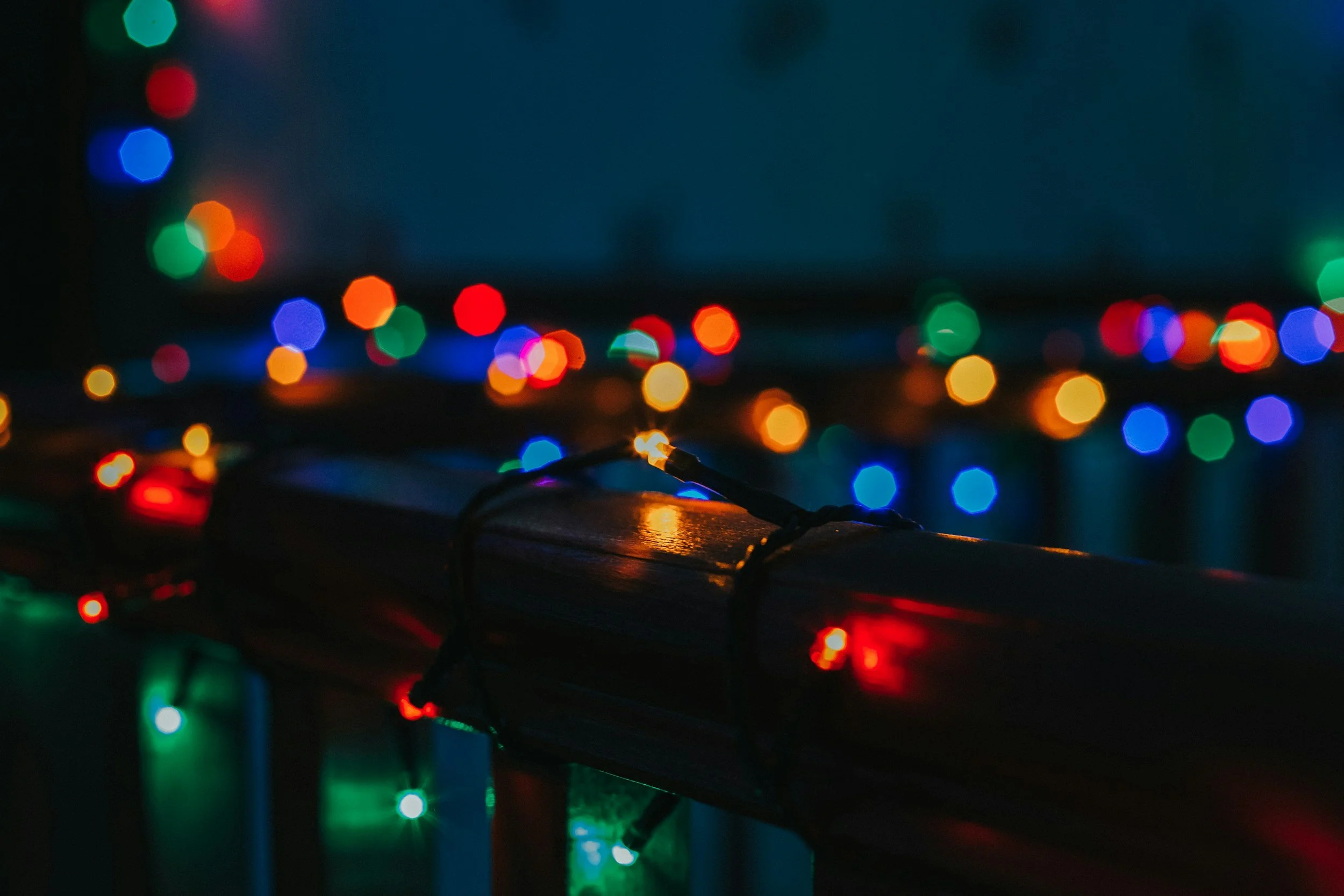
The aperture (f-number) is the secret to controlling how your lights look. You have two main, distinct creative choices:
A. The Dreamy Bokeh Effect (Large Aperture)
Goal: To create soft, round, out-of-focus orbs of light.
Setting: Use the largest aperture your lens allows (the smallest f-number), such as f/1.4, f/1.8, or f/2.8.
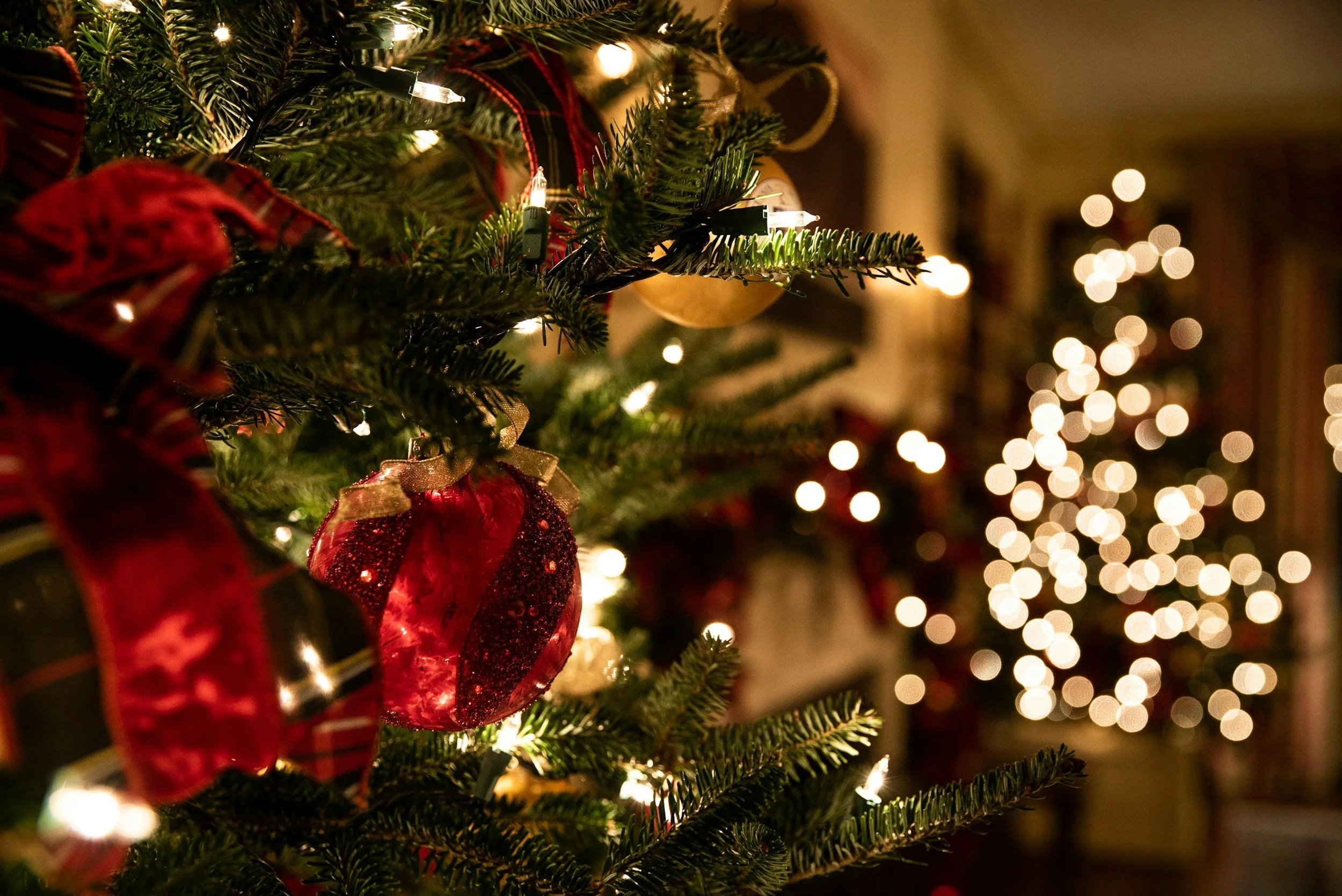
Technique: To maximize the blur, place your subject (or the main focal point) far away from the Christmas lights in the background. The greater the distance, the creamier and larger the bokeh will be.
Tip: If you are photographing the lights themselves, focus on a light closer to the camera to push the majority of the lights into soft bokeh in the background.
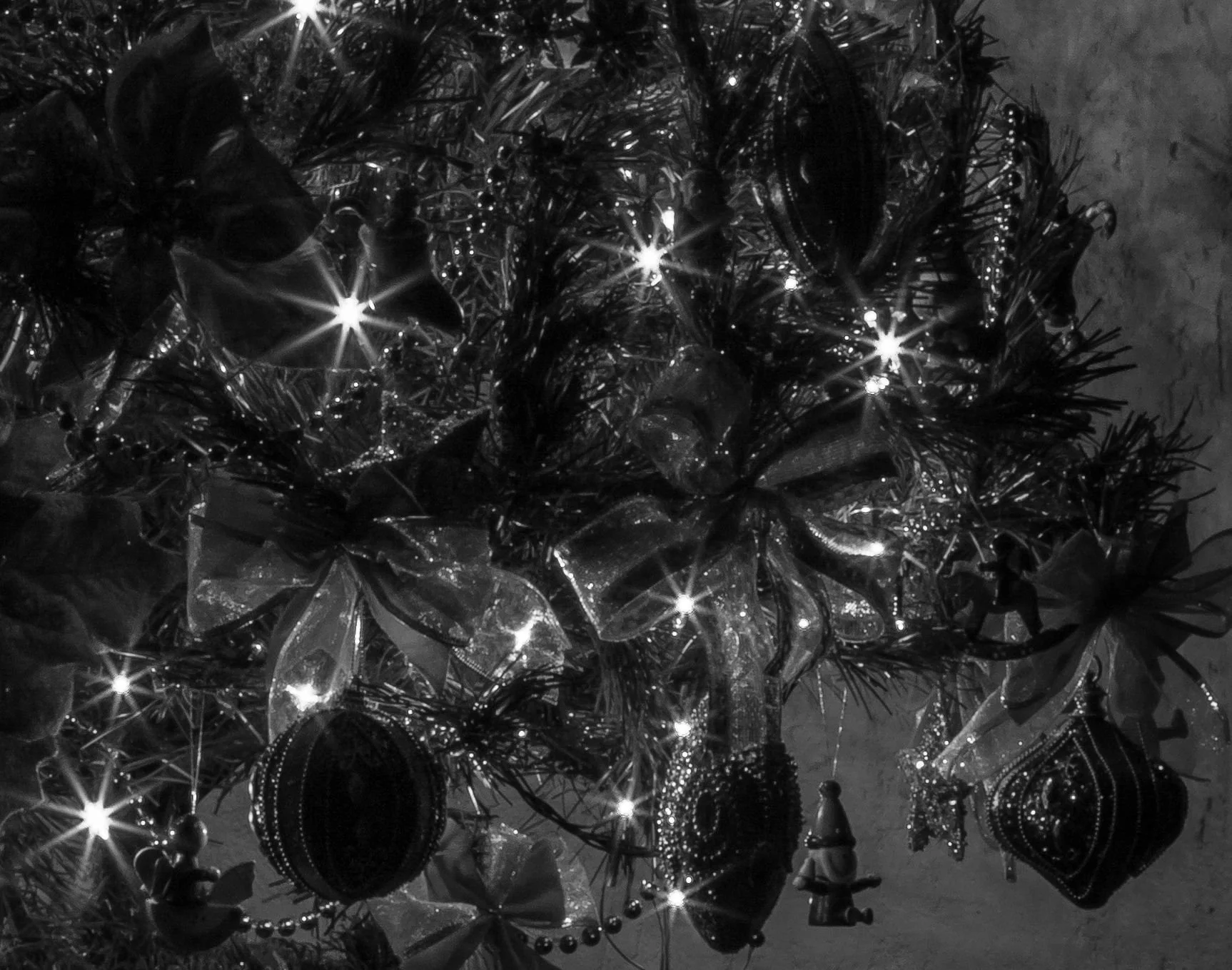
B. The Dramatic Starburst Effect (Small Aperture)
Goal: To make each light source appear as a sharp, defined "starburst" with distinct rays.
Setting: Use a small aperture (a large f-number), typically f/16 or f/22.
Trade-off: A small aperture requires a much slower shutter speed (often multiple seconds). A tripod is essential for this technique to prevent camera shake.
2. Essential Camera Settings for Low Light
Because you are avoiding flash and relying on ambient light, you must balance the three points of the Exposure Triangle—Aperture, Shutter Speed, and ISO.
Aperture: wide (small f/number). Why? Maximizes light intake for handheld shots & creates bokeh.
Shutter Speed: 1/60 or slower. Why? Needed to capture enough light. Use 1/100 for people, 1/15 for stationary scenes.
ISO: start around 800-1600. Why? Boosts the light sensitivity. Raise this only until the scene is properly exposed, as higher ISO increases digital noise (grain).
Camera Tip: If you have a mirrorless camera, you have a huge advantage! You will see the exposure (and light trails) reflected perfectly in your electronic viewfinder (EVF) before you even take the shot, allowing you to dial in the perfect settings instantly.
3. Capturing People and Pets
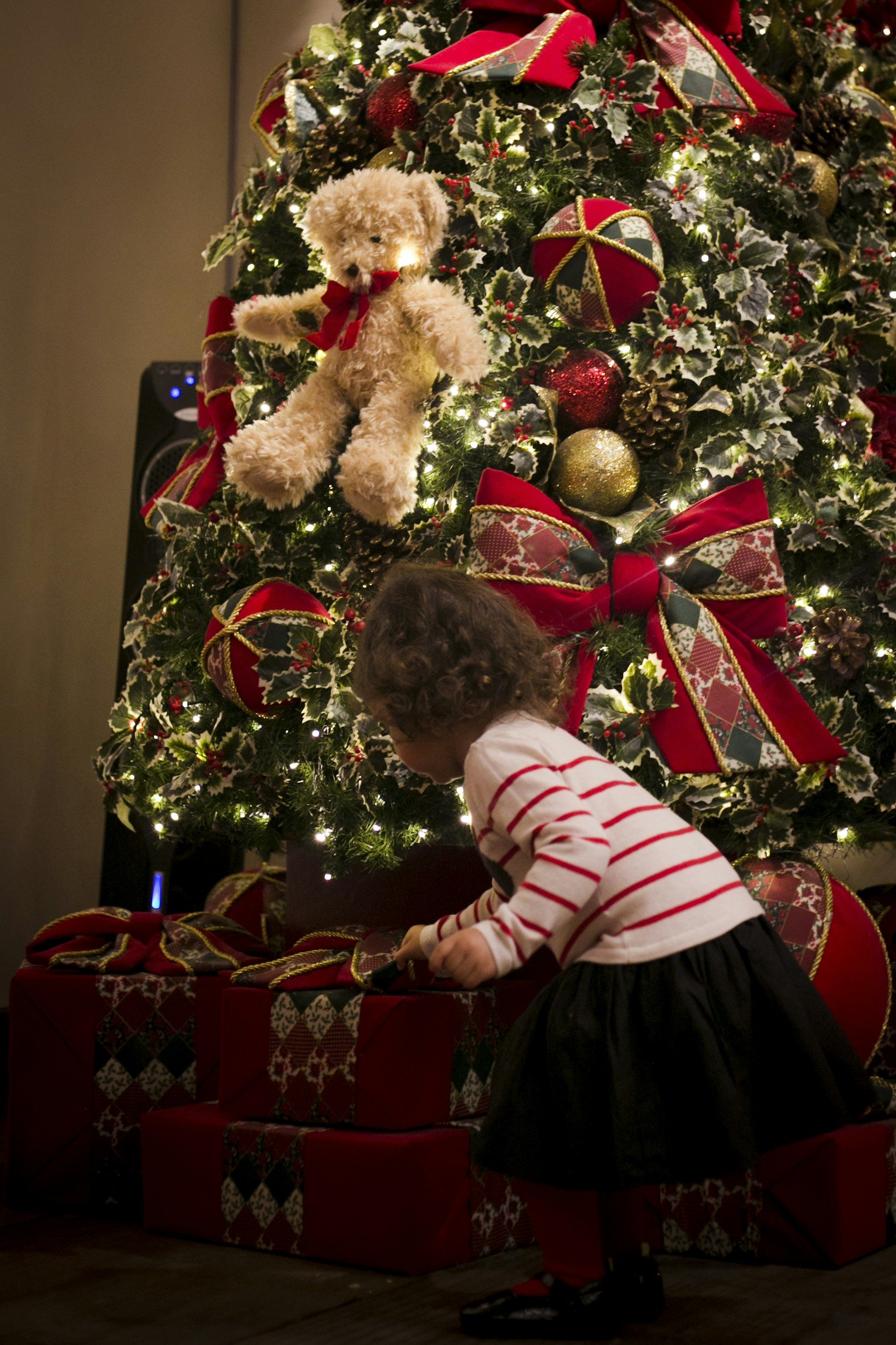
The challenge of photographing people in front of lights is freezing their motion while still allowing the lights to glow.
Use Available Ambient Light: Position your subject near a window or under a strong lamp to provide key light on their face. This will keep your shutter speed as fast as possible (aim for at least 1/100).
Distance is Everything: Place your subject several feet away from the lights (like the Christmas tree or wall display). This separation allows you to use a wide aperture (f/2.8) to keep the subject sharp while throwing the background lights into beautiful bokeh.
Boost the ISO: Don't be afraid to go up to ISO 3200 or even higher, especially on modern cameras, to ensure your shutter speed is fast enough to freeze any movement.
4. Creative Techniques to Try
The Abstract Blur (Out-of-Focus Shot)
For stunning, abstract shots of the lights:
Set your camera on Manual Focus (MF).
Twist the focus ring on your lens until the lights are completely blurred and exaggerated.
Set your aperture wide (f/1.8) and your shutter speed slow (1/15). The resulting image will be a painterly wash of colorful, diffused light.
The Light Trail Effect (Long Exposure)
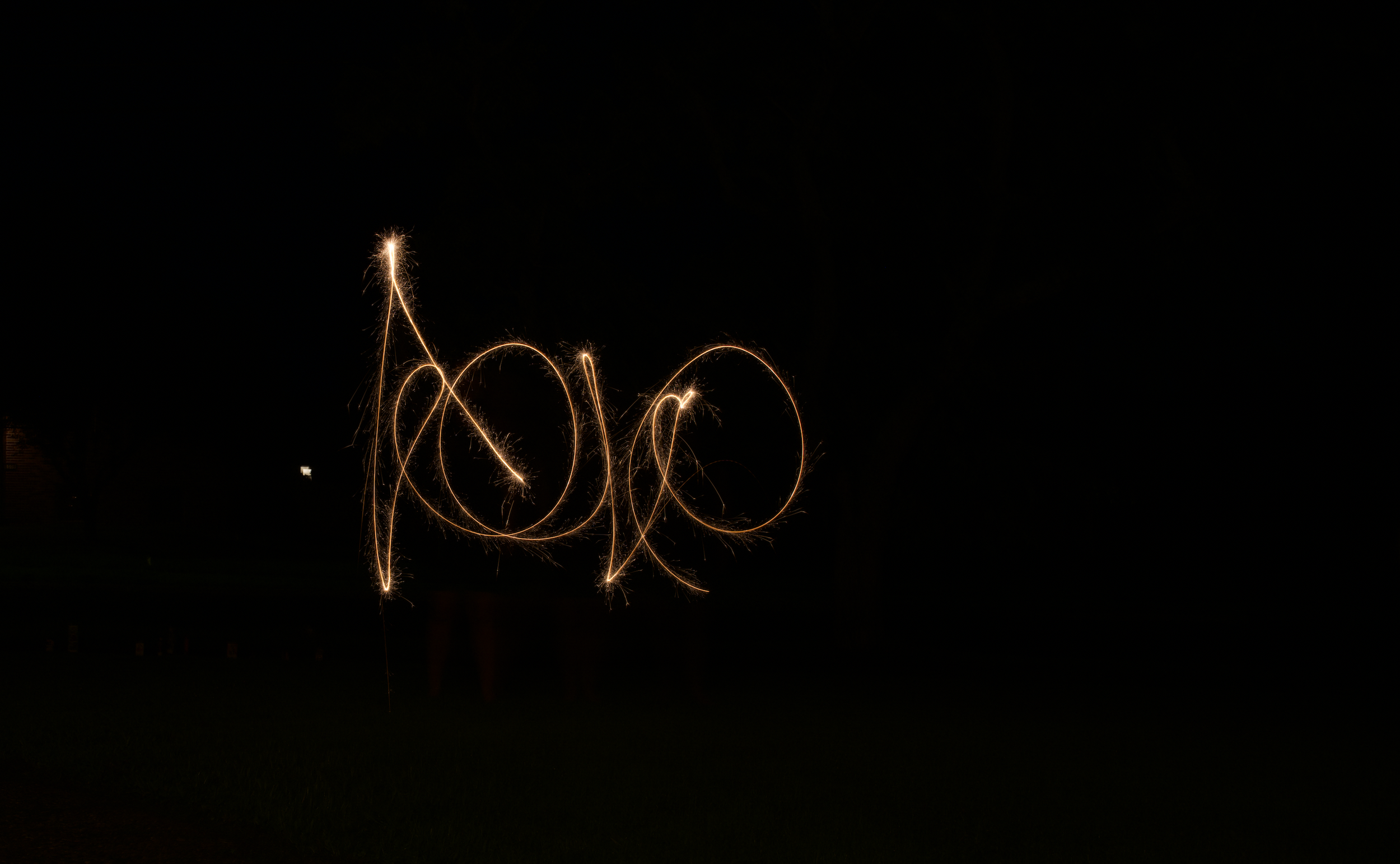
Use a tripod to capture the magic of light trails (e.g., from a car, a train, or even someone running with a sparkler).
Place the camera on a tripod and frame your scene.
Set your aperture to a medium value (e.g., f/8) and your ISO to its lowest setting (ISO 100).
Set your shutter speed to a very long exposure (e.g., 5 seconds, 15 seconds, or even 30 seconds).
Ready to Master Your Low-Light Photography?
If you want to stop guessing and start creating stunning, consistent images in any lighting situation—from bright daylight to moody Christmas nights—it's time to dive into my complete course.
The Camera Series gives you the step-by-step framework to fully understand and utilize the Exposure Triangle, so you can stop relying on "Auto" and start creating with intent.
Click here to enroll in the comprehensive and affordable Camera Series today!
Needing to dive deeper? Check out…
The Lightroom Series for editing.
AI-Powered Hail Mary Masks for lightning fast, unmatched editing tools.
The Camera Series for comprehensive and affordable trainings suitable for beginner or intermediate photographers.
Nancy’s Recommended Gear and where she buys it used (reputable with warranties!)